Car
Royal Jewels Hidden Physical Toll of Wearing Heavy Crown Gems
Jul
The Hidden Physical Cost of Wearing Royal Jewels becomes The unseen physical burden behind royal jewels and the way they are worn
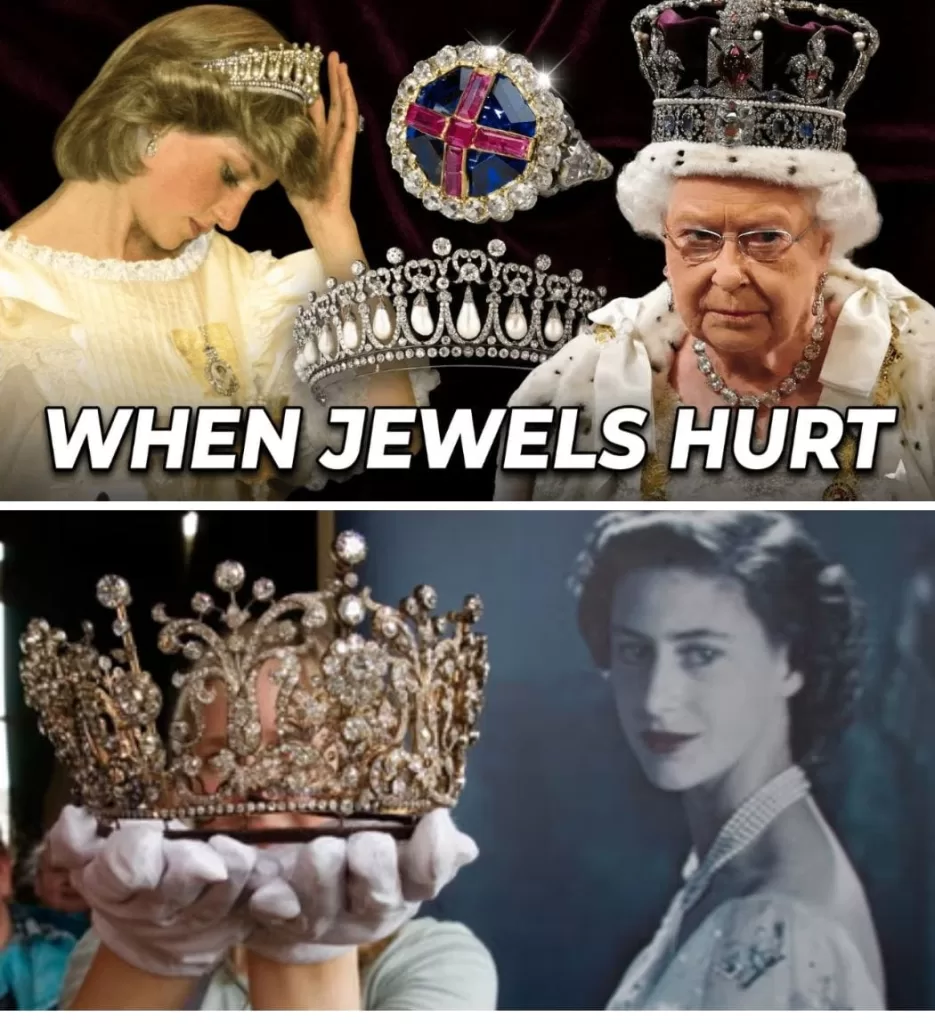
Queen Elizabeth II once challenged the romantic image people often associate with royal jewelry in a strikingly honest remark. Speaking about the Imperial State Crown, a dazzling symbol of monarchy set with nearly 3,000 diamonds, she warned, “You can’t look down to read the speech because if you did, your neck would break or it would fall off.”
“Your neck would break.” Beyond the display cases at the Tower of London and the polished ceremonial portraits, there is a seldom acknowledged reality. These priceless objects—the crowns, tiaras, and famed diamonds that defined entire royal lineages—functioned as more than mere symbols of authority.
They also brought real physical discomfort. They triggered migraines, caused swollen and bruised fingers, and were so heavy, awkward, and painful that some of history’s most influential queens chose not to wear them. When you learn that Queen Elizabeth II avoided wearing priceless Romanoff diamonds because they get in the soup, or that 18-year-old Queen Victoria had to ice her swollen finger after her coronation ring was forced onto the wrong hand, it becomes clear these experiences were far more physically demanding than commonly assumed. This reveals the unexpectedly human reality behind royal jewelry. The Imperial State crown. The weight of duty. The Imperial State Crown, now displayed at the Tower of London, is viewed by visitors through reinforced glass in quiet admiration.
It contains 2,868 diamonds, 17 sapphires, 11 emeralds, 269 pearls, and the Black Prince’s ruby. A stone believed to have been worn by King Henry the fifth at the battle of Agincourt in 1415. It stands as a symbol of empire, continuity, and the sheer weight of history. Its mass is just over 1 kg, 2.3 lb. That may not sound significant at first. But imagine placing that weight directly on your skull.
Not for a few minutes, but for hours on end. Imagine being unable to tilt your head, unable to look down, with neck muscles locked in place because even a slight movement could make the crown slip or cause real injury. In 2018, at the age of 91, Queen Elizabeth II described the actual experience of wearing it. Her words were unusually direct.
“You can’t look down to read the speech, you have to take the speech up because if you did your neck would break or it would fall off.” Then she added with that dry humor that defined her reign, “So there are some disadvantages to crowns, but otherwise they’re quite important things.” Disadvantages. A remarkably understated way to put it.
The crown was originally crafted for her father, King George VI, whose head shape differed from hers. She noted this with her usual practicality. “Fortunately, my father and I have about the same sort of shaped head.” But once placed on the head, it cannot simply be adjusted. Its design includes a leather band fitted with springs intended to help spread the weight.
Even so, one fact remained unchanged. The wearer must keep the neck rigid, the posture fixed, and the gaze directed forward at all times. This was not simply jewelry. It was a physical trial disguised as a royal emblem. Victoria’s coronation ring when tradition inflicts pain. While Elizabeth’s crown exposes the bodily strain of monarchy, Queen Victoria’s coronation in 1838 reveals an even more unsettling reality.
The moment when tradition turns into suffering. Victoria’s coronation was meant to be the grandest event of the century. Instead, it unfolded as a sequence of confusion and genuine hardship. The ceremony was poorly rehearsed. The Archbishop of Canterbury appeared consistently uncertain.
An elderly peer collapsed while approaching to pay homage. One bishop even told Victoria the ceremony had finished while it was still in progress. But the moment that caused her real physical pain involved a single item: her coronation ring. The ring was finely made, featuring an octagonal sapphire surrounded by rubies arranged in a cross and framed by 20 cushion-shaped diamonds.
It was produced by the royal goldsmiths Rundle, Bridge, and Rundle, following long-established tradition. However, the craftsmen made a crucial mistake. They misunderstood the instruction to size the ring for the fourth finger, misreading the medieval counting system in which the thumb was considered the first digit. As a result, it was made for Victoria’s pinky finger.
During the ceremony, Victoria tried to have the archbishop place the coronation ring on her little finger, the only finger it would actually fit. He refused, pointing to duty, tradition, and five centuries of precedent requiring it to be worn on the ring finger instead. He pressed it on. The pain was instant and sharp. In her diary, Victoria later described the moment with striking candor.
She noted that the archbishop had awkwardly put the ring on the wrong finger, which made it extremely difficult to remove afterward; she eventually managed it, but only through significant pain. Once the five-hour ceremony ended, she had to ice her hand. A witness named Greville recorded that she soaked her swollen finger in ice water just to get the ring off.
Even so, Victoria’s reflection on her coronation stayed notably steady. She wrote that “the enthusiasm, affection, and loyalty were really touching, and I shall remember this day as the proudest of my life.” The ring still remains among the Crown Jewels at the Tower of London. Engraved “Queen Victoria’s Coronation Ring, 1838,” it represents less the glory of royal objects than the dignity of an 18-year-old facing rigid tradition and a poorly managed ceremony.
Diamonds in soup. When something priceless turns impractical. Now consider an object that was never shown publicly for 70 years, for a reason that feels distinctly human. In 1928, Queen Mary acquired a striking diamond suite, a long necklace made from stones originating in the legendary Romanov collection.
These were far from ordinary stones; they once belonged to the Russian imperial court before the revolution scattered them across Europe. Known for her “more is more” taste, Queen Mary had them redesigned into a versatile piece that could be worn as a long chain, separated into shorter necklaces, or converted into bracelets. When she died in 1953, this historically important and highly valuable piece passed to her granddaughter, the newly crowned Queen Elizabeth II.
Elizabeth never wore it, not even once in 70 years, and she never lent it out either, despite being generous with other items in her collection. The diamonds had survived revolution, crossed continents, and reflected one of the most dramatic redistributions of wealth in modern history. Yet they stayed locked away, unused and unseen.
Why? According to Sir Hugh Roberts, curator of the Royal Collection, Queen Elizabeth II found long, swinging chains highly impractical. Her explanation reportedly became one of the most revealing statements any monarch has made about royal jewelry: “The diamonds get in the soup.”
Consider that for a moment. A woman at the peak of global authority, surrounded by centuries of accumulated wealth, was concerned with something completely ordinary—the simple need to eat without dipping priceless jewels into her consommé. She also observed that a tall Cartier tiara felt like it might fall into the soup during dinner.
Rather than keep it intact as a museum piece, she had it taken apart, preserving only the individual rose brooches that could be worn without the same risk. Here, the fairy tale meets reality: the most powerful woman in the world making jewelry decisions based on whether she could comfortably eat dinner. The pudding crown.
When symbols slip into soup, pudding comes next. Another moment showed Victoria’s relationship with her regalia taking a humiliating turn. The Imperial State Crown was an architectural masterpiece, crafted in gold and set with more than 3,000 diamonds, along with hundreds of pearls, sapphires, emeralds, rubies, and the Black Prince’s Ruby. It weighed 39.25 troy ounces, heavy enough to require real physical stamina to wear. Victoria used it at her coronation and later at the State Opening of Parliament in 1845. As the Duke of Argyll carried it through Parliament on its ceremonial cushion, it shifted and fell.
When it hit the ground, it did not break dramatically. Instead, it collapsed inward, buckling under the weight of its own jewels. Victoria described the scene in her diary with a blend of restraint and sharp observation: “The crown looked like a pudding that had sat down.” A pudding—soft, misshapen, collapsed—turning a rigid emblem of power into something resembling dessert.
The frame was fixed, yet Victoria stopped wearing the crown for state openings and seldom used it in official portraits. After Prince Albert died in 1861, she later ordered a smaller diamond crown, designed to be lighter and more discreet so it could sit over her widow’s cap.
The 1838 crown’s design went on to serve as the model for every later imperial state crown. Still, Victoria’s attachment to it was irreversibly tainted from the moment it sagged and collapsed like a pudding. The final embarrassment came in 1936 during King George V’s state funeral, when the aging crown failed once more.
During that procession, the upper cross set with Edward the Confessor’s sapphire actually detached and tumbled onto the street. Even the most revered royal emblems eventually break down. Diana’s Spencer Tiara and the discomfort behind its iconic image. On July 29th, 1981, when Princess Diana stepped out of St. Paul’s Cathedral wearing her family’s Spencer tiara, an estimated 750 million people were watching.
Its elaborate design—featuring heart-shaped elements, scrollwork, and diamond floral details arranged in a garland—immediately made it a symbol. What wasn’t seen on camera was Diana’s condition afterward: she suffered a severe headache after hours under the tiara’s weight. Originally a 19th-century heirloom dating back to 1767, it was later redesigned and enlarged by Garrard in 1937.
The piece was far from light. Royal hairdresser Sam McKnight, who frequently worked with Diana, noted that tiaras often left her with headaches. What makes her choice especially telling is that she selected the Spencer tiara over royal alternatives precisely because it was lighter.
The Queen had offered her the renowned Lovers Knot tiara, one of the most striking jewels in the crown collection. Diana declined it, not purely for sentimental reasons, but because the lighter Spencer piece was simply easier to wear. Throughout her marriage and as Princess of Wales, she repeatedly wore it at state banquets, white-tie events, and international tours.
In photographs, it became a defining part of her image, reinforcing the fairytale princess ideal. Behind those images, she was coping with persistent headaches to maintain that appearance. After her divorce from Charles in 1996, the tiara was returned to the Spencer family vaults, not reappearing publicly until 2018, when Lady Celia McCorquodale wore it at her wedding.
It has remained a private family piece ever since, never loaned to Kate Middleton or Meghan Markle. The St. Paul’s image of Diana wearing it shaped global perception of the tiara itself, yet the object has since withdrawn from public life, no longer under the strain of state events or global attention.
That fairy tale image came with real physical pain, which Diana endured without complaint. The Lovers Knot tiara carries its own difficult legacy tied to beauty and burden. This leads to the piece she ultimately refused: the Lovers Knot tiara, and the strain embedded in its history. Queen Mary commissioned it from Garrard in 1913, and it became one of the defining jewels of the 20th century.
Crafted from diamonds and 19 dangling pearls set in silver and gold, and valued at roughly 2–3 million, it stands as a pinnacle of Edwardian design. It later passed to Queen Elizabeth II, who wore it only occasionally rather than regularly. Diana had strong reasons for refusing it for her wedding.
The tiara was heavy—uncomfortably so. Fashion commentator Miranda Holder has confirmed in interviews that Diana suffered intense headaches from wearing the Lovers Knot tiara. Despite its beauty, prolonged use brought real physical discomfort. It raises an uncommon question about such celebrated objects.
What cost did Diana endure to create those enduring images? After her divorce from Charles, the tiara was returned to the Royal Collection and stayed out of public view until 2015, when Kate Middleton wore it at a Buckingham Palace reception, 19 years after Diana last used it. Since then, Kate has worn it more often than any other piece in the collection, doing so with visible ease and composure.
Still, the piece remains linked to suffering, almost like a footnote to Diana’s own story. The “Lovers’ Knot Tiara” was crafted in 1914 at the peak of Edwardian opulence, only months before the Sarajevo assassination that triggered World War I. It captures a historical turning point, the final surge of pre-war aristocratic extravagance, preserved in platinum and pearls.
That an object born in an era of imperial certainty would later be worn by a woman under the most intense modern media scrutiny adds a striking historical irony to its meaning. Queen Alexandra’s mystery paste versus practicality. Now I want to share one of the most fascinating puzzles in royal jewelry history.
It is a narrative that raises the question of whether a queen might have prioritized comfort over authenticity at the most sacred point of her life. In 1902, Queen Alexandra, the wife of King Edward VII, was crowned at Westminster Abbey. Her coronation included one of the most elaborate crowns ever designed for a queen consort. At its center was the famous Koh-i-Noor diamond, surrounded by many other gemstones arranged in intricate patterns that reflected Edwardian luxury at its height.
Yet royal jewelry specialist Suzy Menkes has posed a challenging question. Looking closely at the crown now kept in the Tower of London, the arrangement of the stones seems unusual. The Koh-i-Noor was certainly removed at some stage and replaced with a crystal replica, but the positioning of the other gems suggests they would have been extremely difficult to take out without damaging the structure, raising the possibility that they were never actually removed.
Could Queen Alexandra, known for her independent character and her reported remark, “I shall wear exactly what I like. Bother, enough of this nonsense.” have chosen to be crowned wearing a lighter crown set with paste stones instead of real gems? The idea has never been proven, but it aligns with what is known about her personality and her practical approach to her own body.
She even met with the archbishop before the coronation to discuss how the anointing oil would affect her toupee. She wore a hairpiece to hide thinning hair, showing she was willing to adapt royal conventions when comfort required it. So would she also have chosen a lighter crown to avoid hours of strain? There is no direct proof, but the possibility is compelling.
Perhaps it was the most sensible option available. The physical burden behind symbols is often overlooked. So what do we actually learn from the jewelry queens chose not to wear? We see that the most dazzling emblems of power carried costs unrelated to money. They brought migraines, swollen fingers, and the awkward fear of diamonds slipping into soup.
They also forced a constant negotiation between comfort and duty, between personal ease and centuries of tradition. Queen Elizabeth II chose practicality. Her well-known three-strand pearl necklace, a gift from her father, was worn almost every day for 70 years. It was simple, elegant, lightweight, and deeply significant.
That necklace, in many ways, reflected her true identity more honestly than any tradition-imposed image. And that is the real narrative behind royal jewelry: not effortless glamour, but women quietly balancing the weight of history with each demanding piece they wore. Which story stood out to you the most? Share your thoughts in the comments below.
And if this look inside the royal vaults was as interesting to you as it was to me, please like the video and subscribe to the channel. There are still many hidden stories waiting to be uncovered. Thank you for spending time here today. Until next time.
