
Uncategorized
I Love Lucy: Behind-the-Scenes Secrets of the 10 Funniest Episodes
Jul
Some television series become classics, while others reach an even rarer level of lasting greatness, and *I Love Lucy* unquestionably belongs in that second group. Ever since its original run from 1951 through 1957, it has never disappeared from television, and most of its 180 episodes have earned the label of “classic.” That enduring success owes a great deal to its talented writers and directors, as well as the remarkable comic rapport shared by Lucille Ball, Desi Arnaz, Vivian Vance, and William Frawley in the roles of Lucy, Ricky, Ethel, and Fred.
Countless rankings have already highlighted the 10 funniest episodes, but this approach is different. Instead, we turn to Geoffrey Mark—close friend of Lucille Ball and the acclaimed author of *The Lucy Book*—to uncover behind-the-scenes stories from 10 carefully selected episodes, each accompanied by fascinating memories. As he jokes, “I have anecdotes on 180 episodes of *I Love Lucy*.”
1. ‘Be a Pal’
Ethel persuades Lucy that the excitement has faded from her marriage and that she should make herself more glamorous. When that plan fails, Lucy decides to take an interest in Ricky’s hobbies and joins him for a poker game, which ends as disastrously as expected. After consulting a book for advice, she learns that the key is to remind Ricky of his childhood.
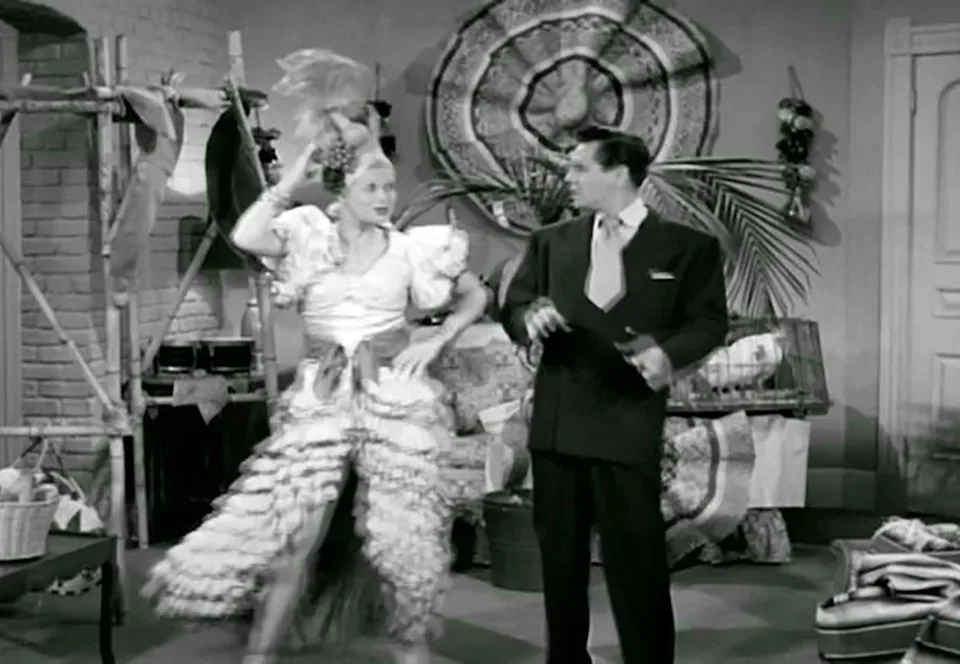
“From there,” Geoffrey Mark explains, “the rest of the episode revolves around Ms. Ball lip-syncing to a Carmen Miranda recording of ‘Mama Eu Quero.’ As the record gradually slows down, she struggles to keep up with it. It’s hilarious on its own, but what makes it even more remarkable is that Carmen Miranda herself was sitting in the audience watching the performance. She had been invited specifically for that purpose. Rosalyn Russell was there, and I believe Eve Arden was as well. It wasn’t unusual for *I Love Lucy* to attract celebrities to the audience, particularly during its early years when the show was new and earning outstanding ratings.”
In the 1951 episode “Be a Pal,” Lucy performs her own version of Carmen Miranda in an effort to rekindle the spark in her marriage with Ricky. ©CBS/YouTube
“Many visitors came to the set simply to see how the show was produced,” he continues, “but this occasion was different because everyone wanted to watch her perform this routine. You can hear the audience erupt with laughter, and part of that reaction comes from knowing Carmen Miranda is sitting there watching Lucille Ball imitate her so brilliantly—both in the moments when she gets it exactly right and when she deliberately gets it wrong. That incredible audience response only pushes Ms. Ball’s performance to an even higher level.”
2. ‘The Audition’
In many respects, Lucille Ball’s radio program *My Favorite Husband* served as the foundation—or an unofficial pilot—for the television version of *I Love Lucy*. When CBS considered adapting the series for TV, Lucy insisted that her real-life husband, Desi Arnaz, replace her radio co-star Richard Denning. The network objected because executives believed viewers would reject what they regarded as a “mixed marriage.” To prove them wrong, Lucy and Desi created a live vaudeville act that blended comedy and music, performing it in movie theaters between film screenings.
“Pepito was an exceptionally talented Spanish-speaking clown who was hugely popular at the time,” Geoffrey recalls. “He helped shape the physical comedy in their act. If you remember, she appears dressed like an old-fashioned professor, carrying a large bass fiddle and wearing a hat, and Pepito worked out all of that physical business with them. They eventually took material from the vaudeville routine, built a script around it, and that became the pilot for *I Love Lucy*. It wasn’t broadcast until the late eighties and never entered regular reruns, but they wanted to recycle the script for the television series, so they rewrote it and filmed it again using three cameras in front of a live audience.”
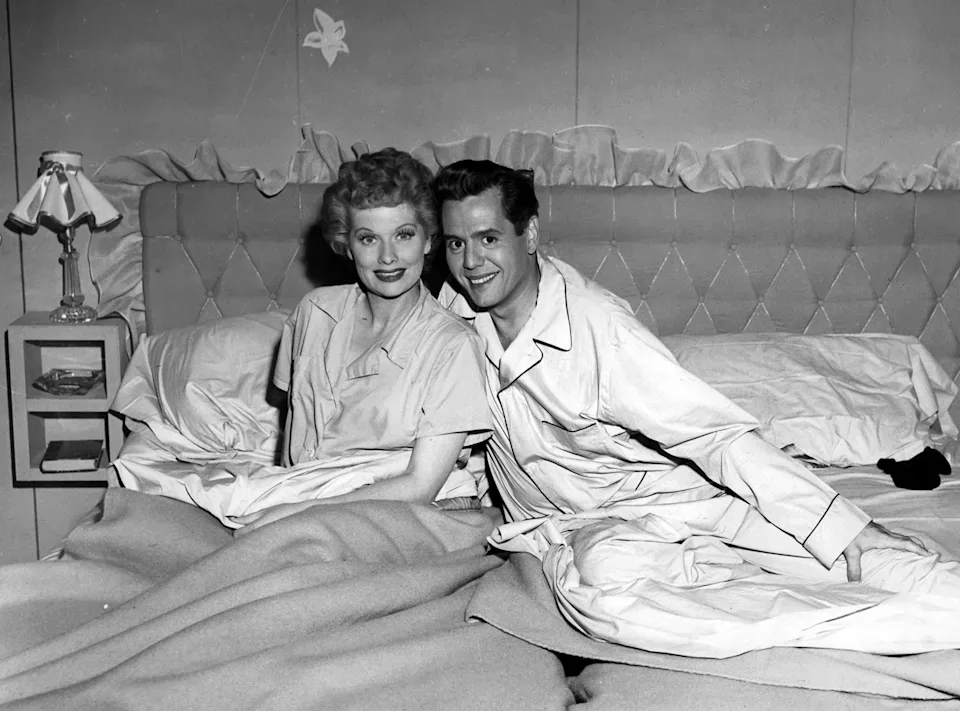
Lucille Ball and Desi Arnaz lying in bed in the 1951 pilot episode of the television series *I Love Lucy*. CBS/Getty Images
“What’s especially interesting,” Mark adds, “is that the pilot ultimately persuaded CBS that he could convincingly play her husband because audiences at the live theater performances adored both of them and loved the act. They probably could have become major stars on the stage and in nightclubs with that routine, but Ms. Ball became pregnant. She was actually pregnant while filming the pilot. In the end, CBS concluded that America would accept Desi Arnaz as Lucille Ball’s husband, despite the fact that the two of them had already been married for 10 years.”
3. ‘Pioneer Women’
The premise is simple: Lucy and Ethel challenge Ricky and Fred by insisting they can survive exactly as their ancestors once did. The experiment reaches its comic peak when the two women attempt to bake a loaf of bread, only for the dough to grow completely beyond their control.
Geoffrey reflects, “One part of the episode shows Ethel and Lucy baking bread from scratch. The joke is that they misread the recipe and add 12 cups of yeast instead of two. I never questioned it until I was an adult researching the first Lucy Book. No matter how much yeast you put into dough, or how large the dough is before it goes into the oven, it will never bake into a loaf that stretches three times farther than the oven’s depth. The oven rack doesn’t magically grow longer because of the extra yeast either. But that isn’t a special effect—it’s artistry. It’s an actor fully committing to the performance as an artist.”
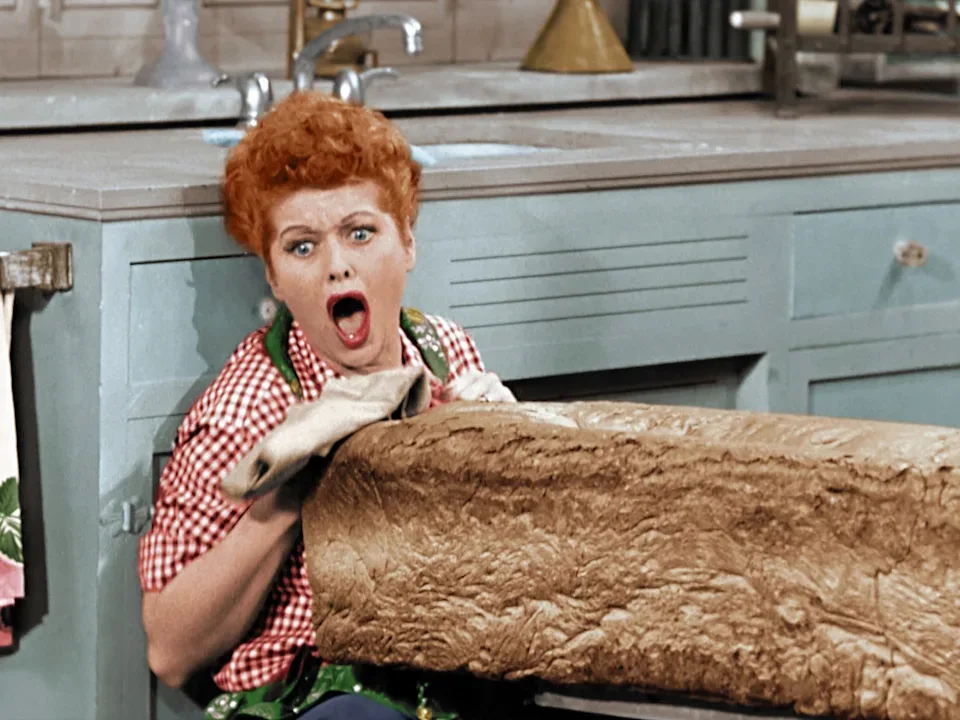
In the 1951 episode “Pioneer Women,” Lucy ends up defeated by the runaway yeast. ©CBS/courtesy MovieStillsDB.com
Mark explains, “This episode is the clearest example, although it really applies to nearly every one: Lucille Ball committed so completely to the idea that something like this could happen that viewers never stop to wonder where an enormous oven rack suddenly came from. Or why Ethel just happens to have a saw on the back porch of a New York City apartment to cut it apart. There’s simply a saw sitting outside the back door waiting for that exact moment. Lucille taught Vivian, and indirectly Desi and Bill as well, that none of this absurdity works unless the characters themselves believe it’s real. Once they believe it, the audience will too. This episode demonstrates that better than any other.”
4. “Ricky Thinks He’s Getting Bald”
After Lucy makes an offhand remark about aging, Ricky becomes convinced that he is losing his hair. To reassure him, Lucy organizes a “bald party” so he can see what bald men actually look like. When Ricky never arrives because he is stuck at the club, she turns instead to foul-smelling hair treatments and a mechanical device to rub them in, creating the episode’s biggest comic moment.
Geoffrey reveals, “This is the only episode of I Love Lucy that had to be re-edited after it was filmed, with additional insert shots added later. In the original script, Lucy first went to the store, then they performed all the hair-restoration treatments, and only afterward came the bald men’s party. The result was a hilarious second act that exhausted the audience, leaving the bald men’s party to earn only a few light chuckles instead of big laughs. They realized the solution was to move the bald men’s party into the middle and save the hair-restoration sequence for the finale. Vivian and Lucille then had to reshoot the entrances and exits of those scenes so everything fit together logically.”
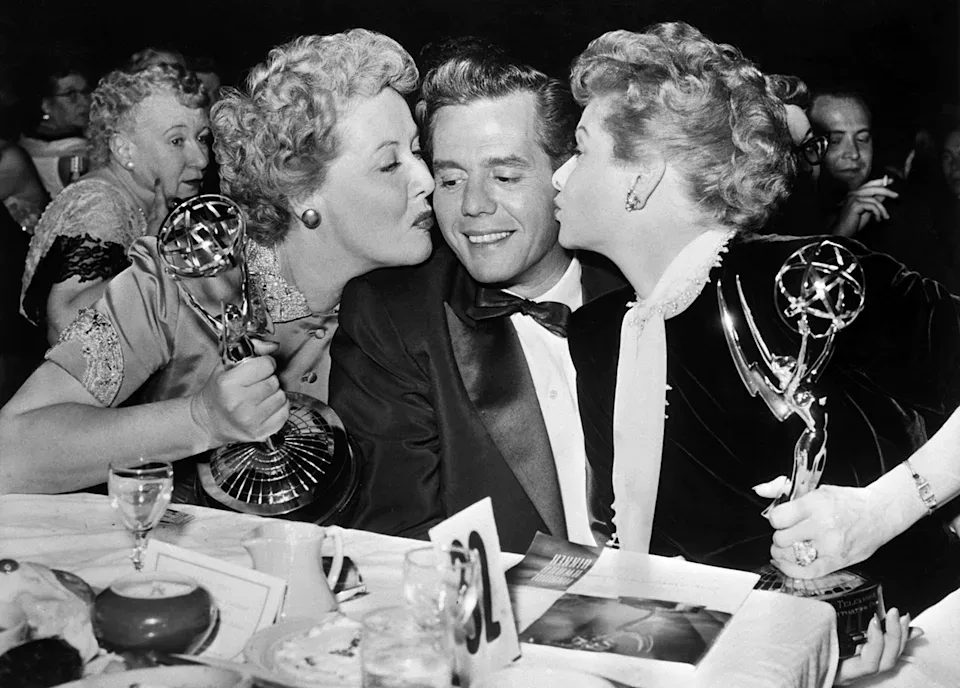
Original Caption: I Love Lucy won the Emmy for Best Situation Comedy. Celebrating the honor are Vivian Vance (left), who also received the Emmy for Best Supporting Actress for her performance on the series starring Lucille Ball, and Desi Arnaz standing happily between them. The ceremony took place at the Palladium Theater, where the Academy of Television Arts and Sciences presented the annual Emmy Awards during its awards dinner. Bettman/Getty Images
“If you pay close attention,” Geoffrey says, “it first appears that Lucy is about to begin the hair-restoration treatments, but she changes her mind, and Ethel asks, ‘What happened?’ Lucy replies, ‘Oh, I didn’t have the heart to do it.’ That exchange was newly added. After that comes the bald men’s party, which Ricky never attends, followed by another inserted moment where Lucy says, ‘Well, Lucy Ricardo’s torture system, here we come.’”
They then moved what had originally been the middle sequence to the very end by editing it into the episode that way. During rehearsals, the equipment was used, but the messy hair treatment was not, so Desi Arnaz’s reactions to everything happening were completely genuine. Although the script called for him to react, he went well beyond what was written, resulting in a brilliant piece of comedy shared by both performers.
5. “Job Switching”
Frustrated by what they see as Lucy and Ethel’s excessive spending, Ricky and Fred argue that managing a household is easier than earning a paycheck. To prove otherwise, Lucy and Ethel take jobs at a candy factory while the men stay home to handle the housework. The episode features one of the series’ most iconic scenes, with Lucy, Ethel, an overly strict forelady, and an endlessly moving conveyor belt of chocolates.
At the candy factory, the forewoman gives Lucy firm instructions in the candy-dipping department. Lucy carefully observes the experienced worker beside her, who effortlessly picks up a cream center, drops it into melted chocolate, rolls it, coats it completely, sets it aside, and finishes it with a decorative swirl. Beaming with confidence, Lucy attempts to copy every step, only to end up smearing chocolate all over the marble slab with her fingers, as carefree as a child happily making mud pies.
At last, Lucy finishes a piece and triumphantly tosses it onto the completed-candy tray. The result is a lopsided disaster. “Hey, this is fun!” she exclaims. Moments later, a fly lands on the other woman’s face. Without thinking, Lucy—her hand coated in chocolate—swats at it, smearing a brown blotch across her coworker’s face. The woman immediately retaliates with a slap that leaves Lucy’s face completely covered in chocolate. And all of this happens before the famous conveyor belt sequence even begins.
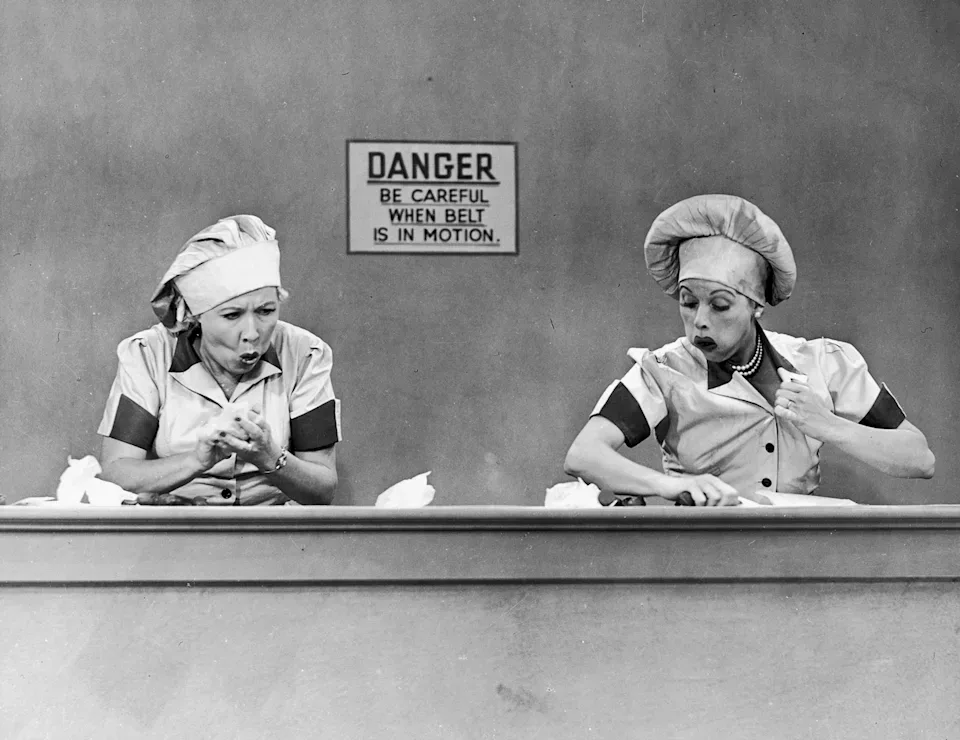
Lucy and Ethel struggle to keep up with the chocolate assembly line in the 1952 episode “Job Switching.” ©CBS/courtesy MovieStillsDB.com
“Back when the Farmer’s Market on Fairfax Boulevard in Hollywood was at its peak, it was even larger and more popular than it is today,” Mark says. “In Southern California, the major candy company was See’s Candies. At the Farmer’s Market, they had candy dippers working in a display window where people could watch them by hand, and afterward you could buy boxes of See’s Candies.”
They brought in a real candy dipper named Amanda Milligan and cast her as the woman working beside Lucy Ricardo. “She wasn’t an actress, so she had no understanding of acting techniques or that she wasn’t supposed to actually hurt Ms. Ball,” Mark says. “Instead, she slapped her square across the face. Ms. Ball really took a hard hit from that woman.”
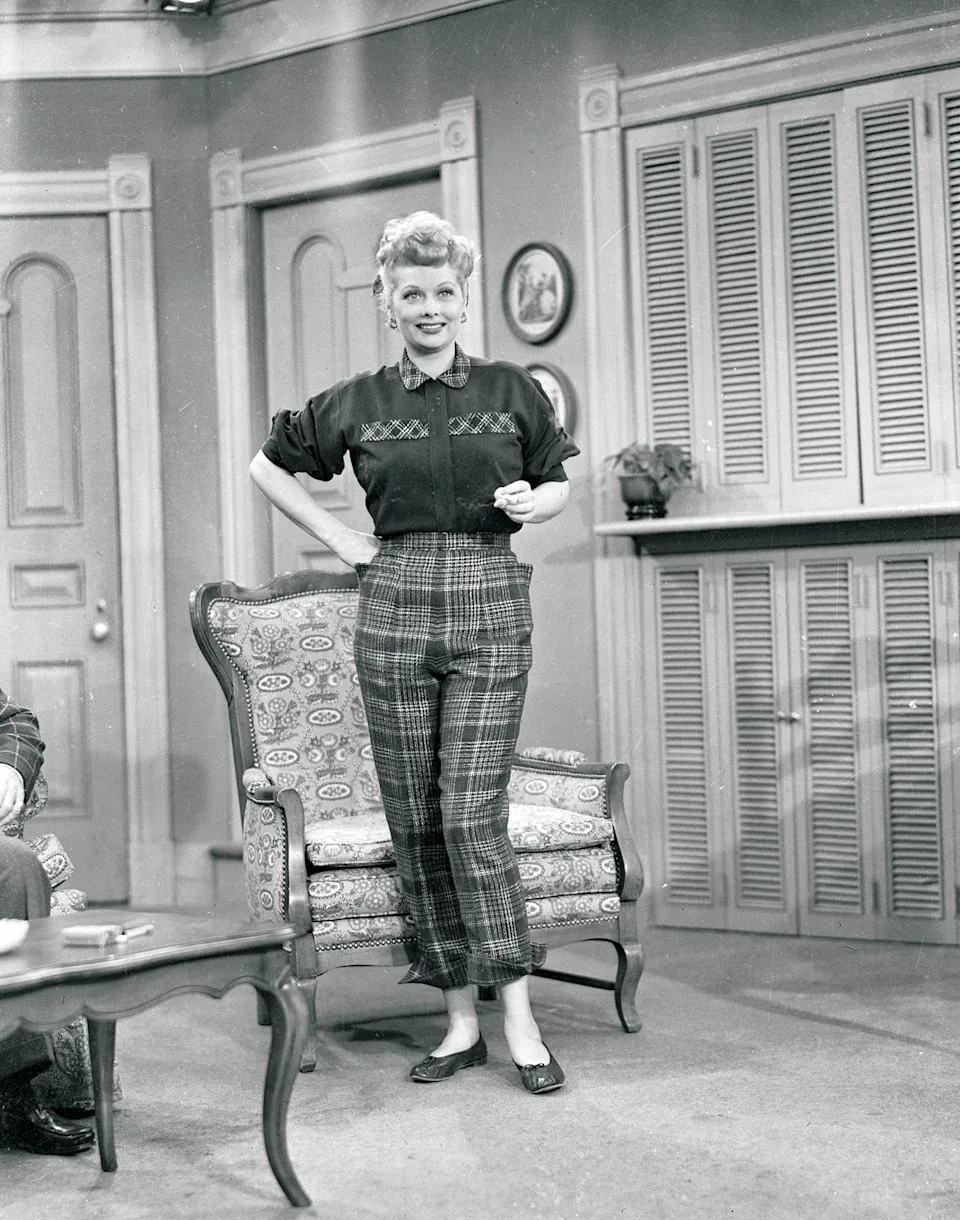
While filming the episode “Job Switching,” Lucille Ball literally absorbed every blow that came her way. Bettmann Archive/Getty Images
“They re-edited the scene using a couple of different camera angles, making it appear as though Lucy gets slapped twice, which doubled the laughs,” Mark explains. “It was painful, but Ms. Ball was an extraordinary professional. She believed that once the cameras were rolling, you kept going unless there was an earthquake or someone died. If something went wrong, it could always be fixed in editing. She also understood that she was working with someone who had no acting experience.”
6. “The Girls Go Into Business” episodes of I Love Lucy
After learning that their favorite dress shop is up for sale, Lucy and Ethel secretly purchase it without telling Ricky or Fred. As expected, the venture quickly turns into a complete disaster. Off-camera that same week, however, the mood was far from comedic. Newspaper columnist Walter Winchell revealed to the nation that Lucille Ball had registered to vote Communist during the 1930s to satisfy her grandfather.
She had previously appeared before the American Activities Committee in a private hearing, where she explained why she had registered that way. The committee later concluded the matter did not warrant further investigation. Even so, the story suddenly became front-page news.
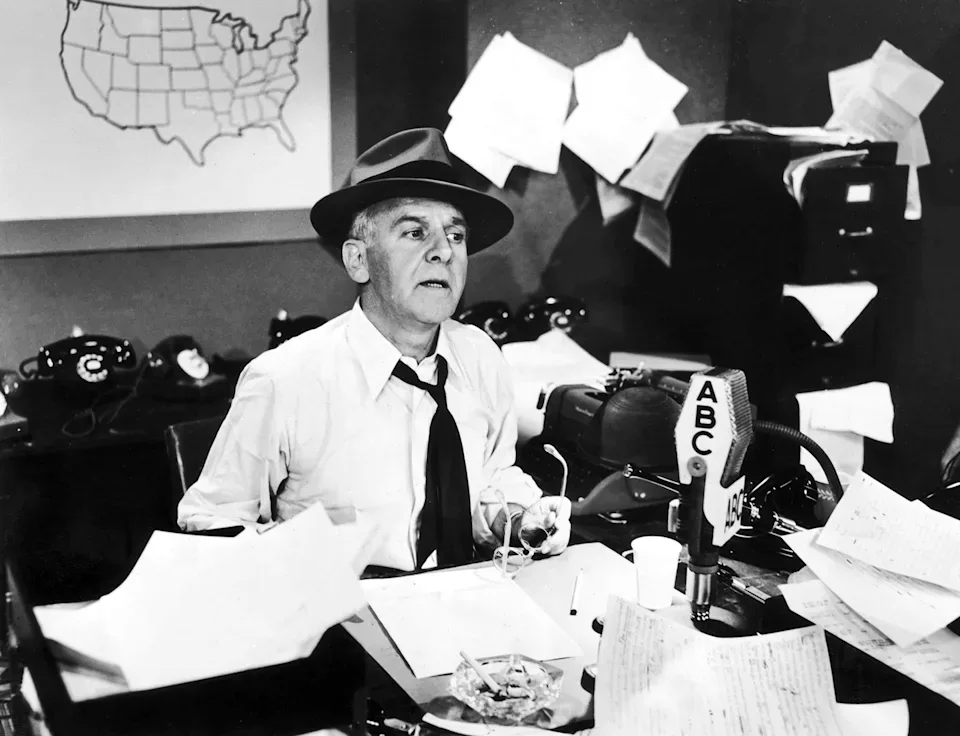
Around 1955, American journalist Walter Winchell is pictured seated at a desk covered with scattered papers during an ABC radio broadcast. Hulton Archive/Getty Images
“Nobody knew whether I Love Lucy would even air that week because careers were being destroyed over situations like this,” Mark says. “Our country was foolishly ruining people’s lives based on rumors and insinuations. Walter Winchell misled people by leaving out key facts. He knew this was an old story, yet he presented it as though it had just happened. It became a huge issue.”
“I Love Lucy was the highest-rated show on television, their production company was the most successful, Lucille and Desi were CBS’ golden couple, and their sponsor, Phillip Morris, was, I believe, the leading cigarette company at the time,” Mark says. “There was an enormous amount at stake. Mr. Arnaz made several phone calls to people who ultimately persuaded Mr. Winchell that he needed to put an end to it.”
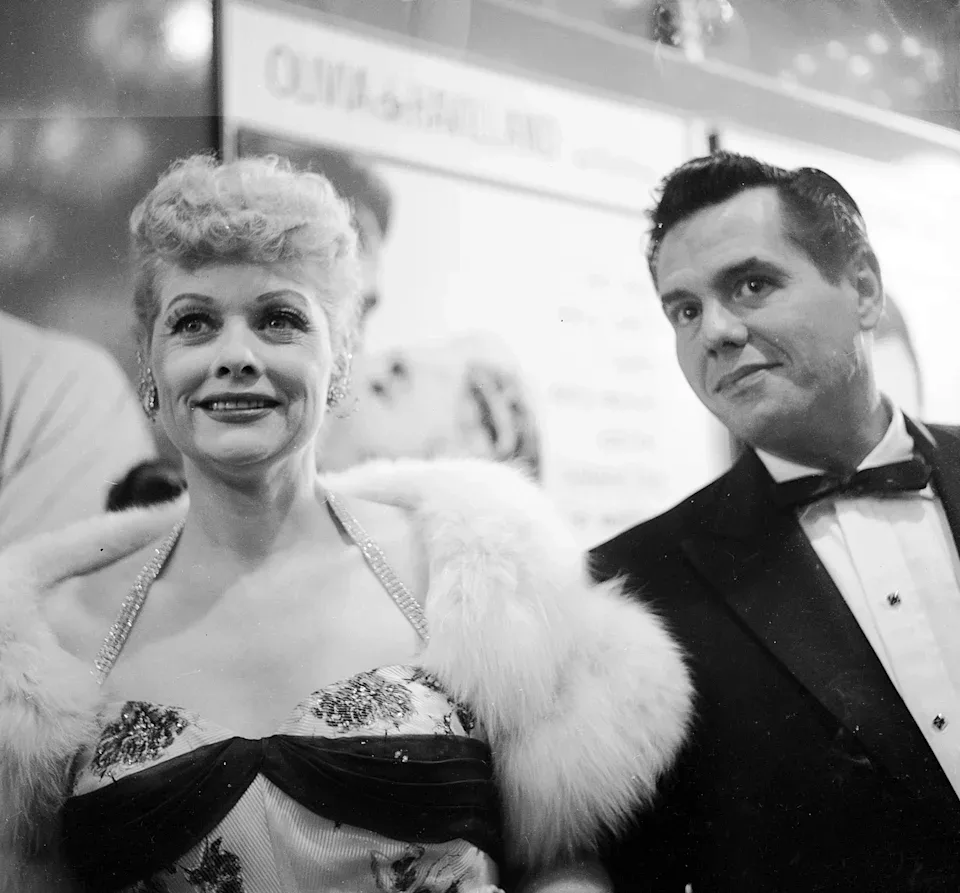
Lucille Ball and Desi Arnaz attend a CBS party honoring Johnny Carson on June 30, 1955. Earl Leaf/Michael Ochs Archives/Getty Images
“Desi always handled the audience warm-up before each episode was filmed,” he continues. “That week, he introduced Ms. Ball as his favorite redhead and joked, ‘Even that part is not legitimate.’ Then, according to reports, he took a phone call in front of the audience and played it over the microphone, announcing that she had been completely cleared and that there was no issue at all. He wanted the audience to hear it because there was concern they might boo her. Once filming wrapped, she finally broke down emotionally and cried. It was an incredibly painful week and an especially difficult night for everyone involved.”
7. “The Fashion Show” episodes of I Love Lucy
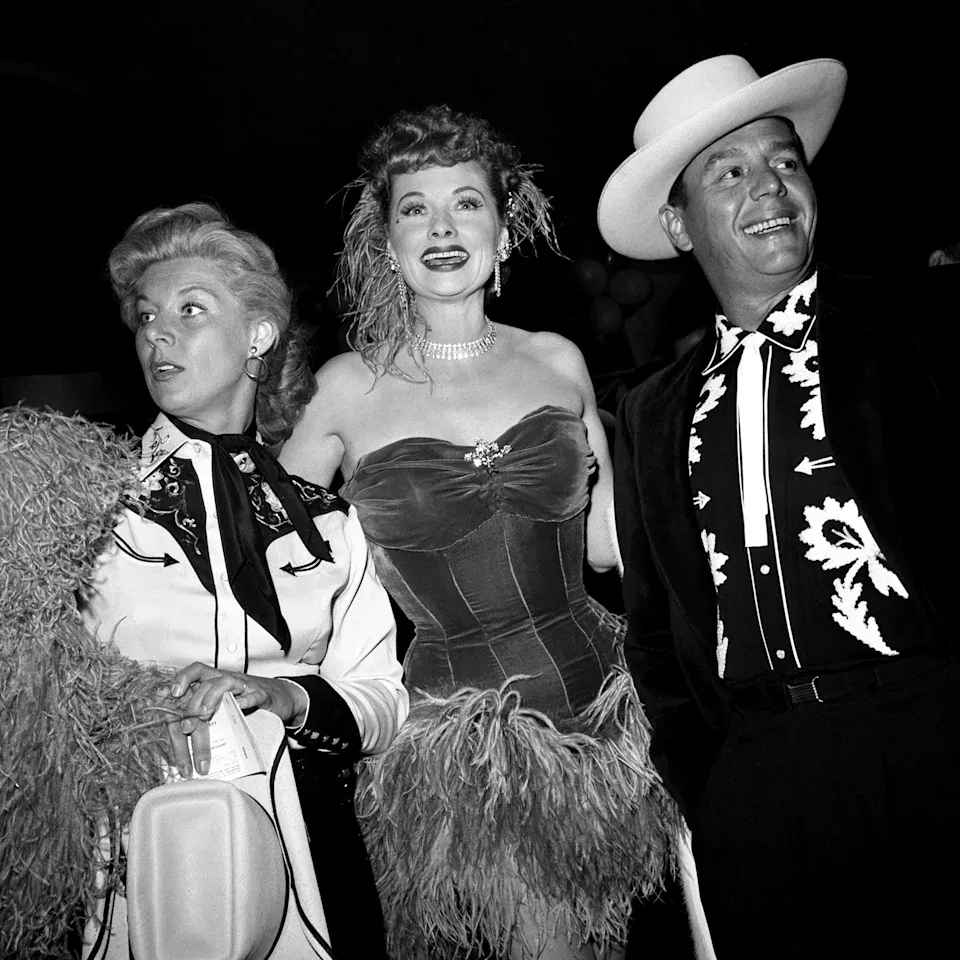
Lucille Ball, Desi Arnaz, and Sheila MacRae at the Fancy Dress Photographers Ball, circa 1956. I Love Lucy episodes Screen Archives/Getty Images
Lucy becomes determined to own an elegant Dan Loper gown and ultimately takes part in a “Hollywood Wives” fashion show. It is worth noting that this storyline belonged to the California episodes broadcast during the show’s fourth season. According to Geoffrey, actress Sheila MacRae, the wife of actor, singer, and television host Gordon MacRae, had experienced a miscarriage and was struggling with a very real period of depression afterward.
“Lucille,” Mark explains, “had an episode created in which she could essentially portray herself while having a believable excuse to wear a custom Don Loper dress, have her hair and makeup professionally done, stand before an audience, make people laugh, and lift her own spirits. That was the entire purpose behind making the episode.”
8. “Lucy and Harpo Marx” I Love Lucy Episodes
Lucy must keep a promise she made to her friend Carolyn Appleby by introducing her to genuine Hollywood celebrities. She hides Carolyn’s glasses—the only occasion the character ever wears them in the series—so Carolyn can be fooled into thinking she has met Clark Gable and Gary Cooper. For the final act of the deception, Lucy disguises herself as Harpo Marx of the Marx Brothers just as the real Harpo unexpectedly arrives. The situation leads to the unforgettable “mirror” routine (featured in the video above).
Geoffrey notes that Lucille Ball had previously appeared in the Marx Brothers movie Room Service, adding, “By this time, Harpo had retired to Palm Springs after suffering a couple of heart attacks. His family wanted him to take it easy, so he only accepted occasional work. This particular episode was written specifically for him.”
The difficulty came near the conclusion, when Harpo was required to carry Carolyn using a fireman’s carry. By the time this episode was filmed, he had spent nearly 50 years performing on stage despite his health problems. “Once he was performing, though, the adrenaline took over,” Mark says. “He lifted Doris Singleton, who played Carolyn, and then his hat slipped off. With her still over his shoulder, he bent down, picked up the hat, and exited the scene. Shortly afterward, he suffered a heart attack. Fortunately, it was a mild one, and he was well enough to attend the cast party that evening. Still, it convinced his family that he should no longer do physically demanding performances.”
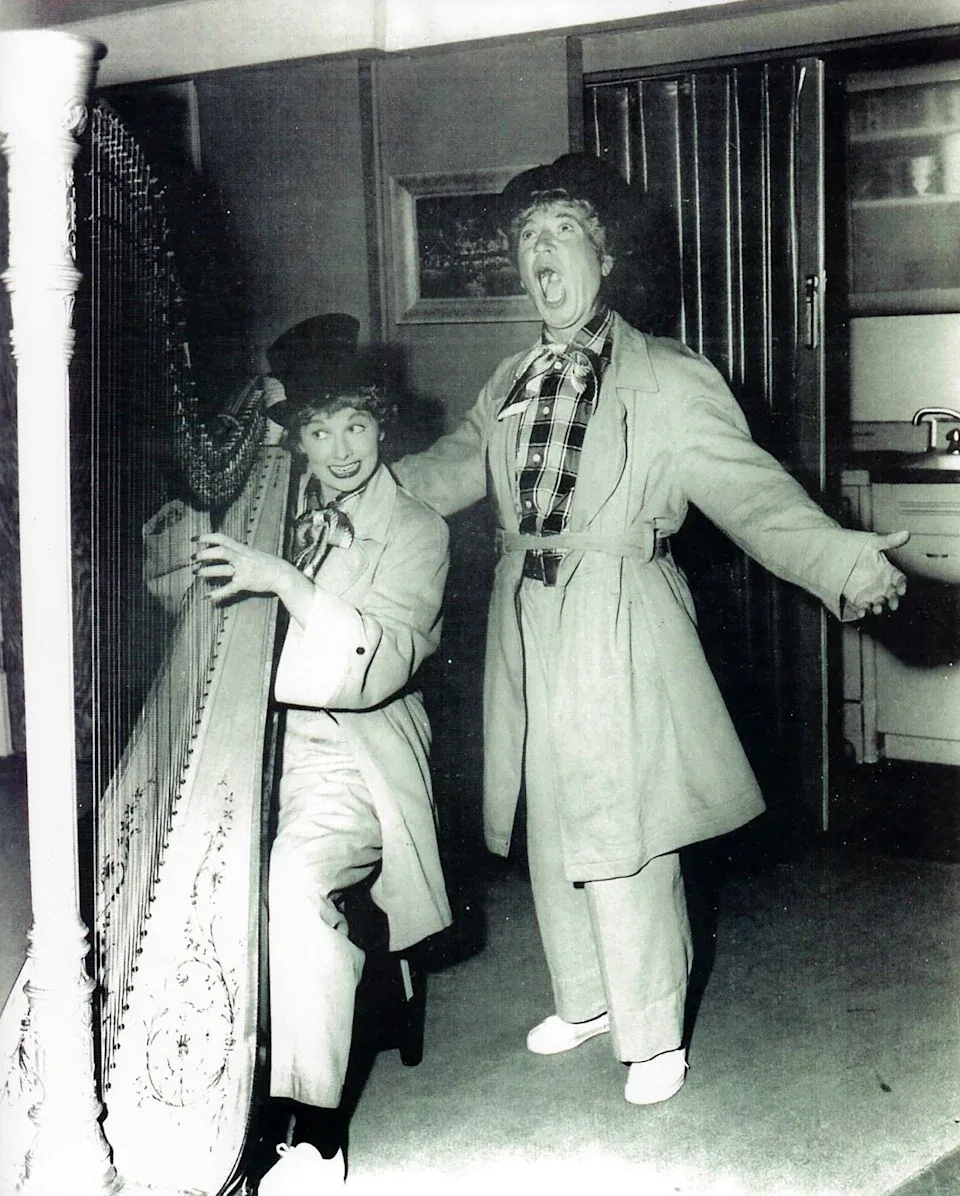
Lucille Ball and Harpo Marx behind the scenes during the filming of their Season 4 episode, which aired in 1955. From the private collection of Geoffrey Mark.
He also points out that the famous mirror sequence featuring Harpo and Lucy was inspired by an earlier scene between Harpo and Groucho Marx in one of the Marx Brothers films. “In the original version, Harpo is trying to make Groucho believe he’s looking at his own reflection when he’s actually seeing Harpo, so Harpo copies Groucho’s every move. In this version, he mirrors Lucy instead.”
9. “The Lucy Christmas Show” I Love Lucy Episodes
Newly filmed scenes serve as a framework for clips from earlier episodes, with the Ricardos and the Mertzes decorating their Christmas tree while reminiscing about holidays from previous years. Although regarded as a special episode, it was excluded from the syndication package and did not return to television until a colorized broadcast in 1990, later becoming part of the series’ DVD collection. It is recognized as television’s first “clip show,” a format that would become common for many years afterward.
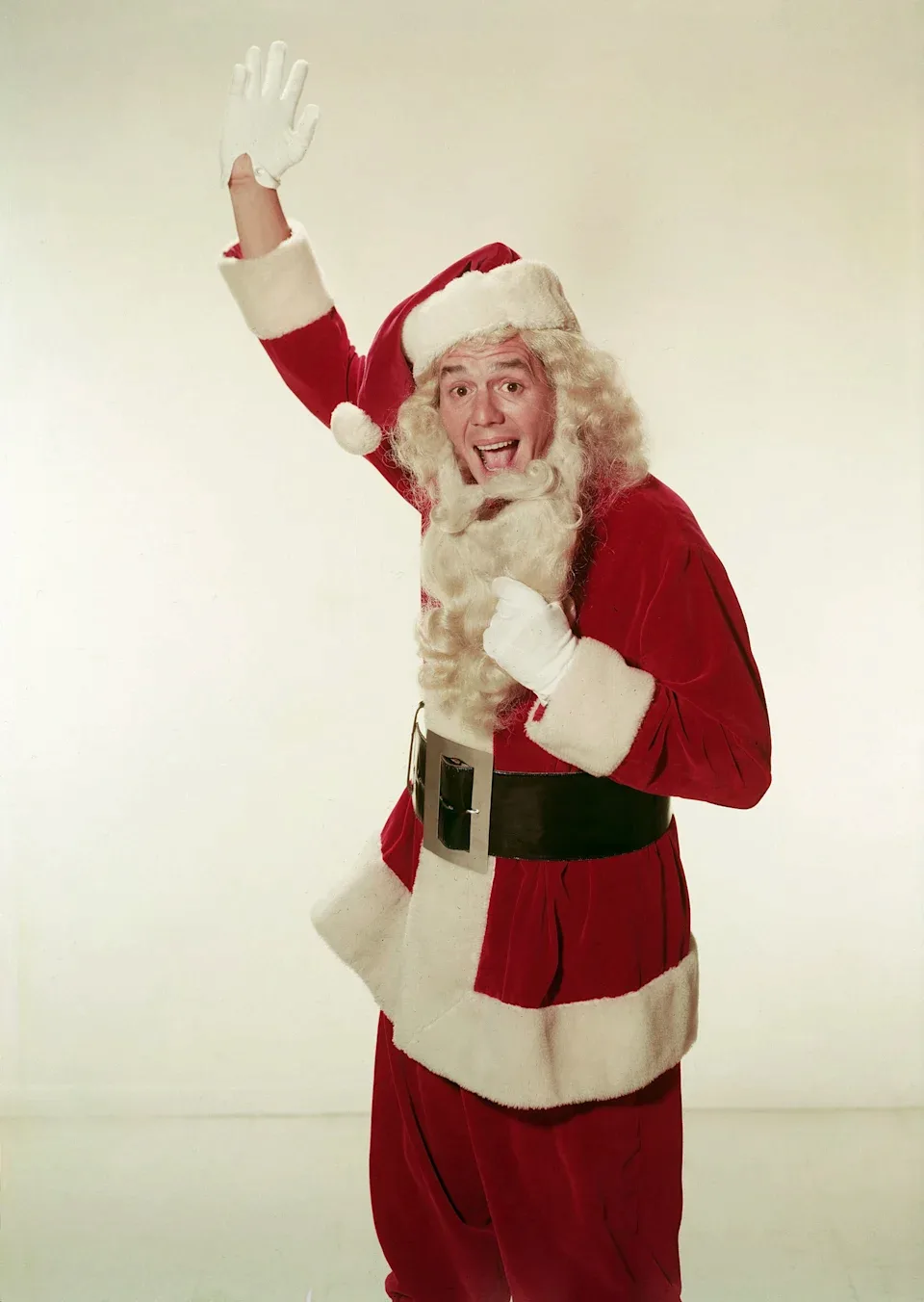
Desi Arnaz’s Ricky Ricardo appears as Santa Claus in the 1956 Christmas episode of I Love Lucy. ©CBS/courtesy MovieStillsDB.com
“I once asked Ms. Ball why this episode disappeared from reruns for such a long time,” Mark recalls. “She gave me two reasons. First, syndication was still in its infancy, and people worried that a Christmas episode might end up airing in July, February, or whenever it happened to come up in the rotation. Eventually they realized audiences didn’t mind—they simply wanted to watch the show.”
She also admitted that there was something about the finished episode that unsettled her. “What bothered her,” Mark says, “was that the script included remarks suggesting the four characters were growing older. There’s even a line where Lucy acknowledges that her voice isn’t what it used to be. I don’t believe Ms. Ball liked the implication that her own voice was aging, especially since it had just begun to develop a slightly deeper tone.”
Because of that, even now, whenever a platform offers the complete run of I Love Lucy episodes, the Christmas special is still left out.
10. “Lucy and Superman”
One of the standout episodes of *I Love Lucy* centers on Lucy assuring everyone that Superman—played by George Reeves from the television series *Adventures of Superman*—will appear at little Ricky’s birthday celebration. When it becomes clear that the plan may fall through, she puts on a Superman costume herself, convinced she can deceive the children attending the party.
Perched on the ledge outside the living room window, Lucy is about to make her entrance when the real Man of Steel unexpectedly arrives, vaulting from the kitchen into the living room through the shutters. In the closing scene, after Lucy ends up stranded on a drainpipe during a rainstorm, Superman rescues her and laughs as Ricky remarks that, after 15 years of marriage, this is the wildest stunt she has ever pulled.
Superman turns to him and replies, “Mr. Ricardo, are you saying you’ve been married to this woman for 15 years? And they call me Superman!”
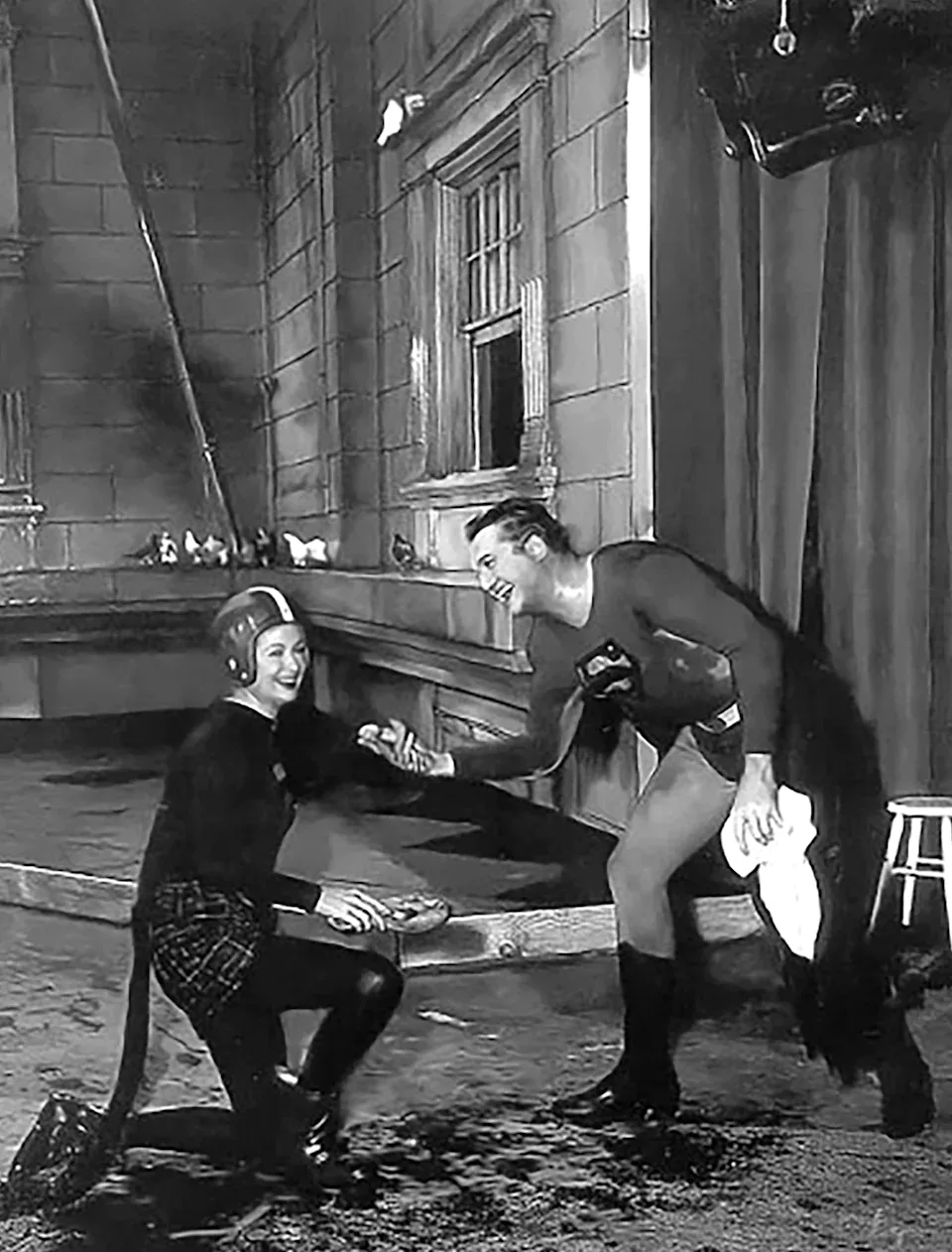
In this 1957 episode, “Super Lucy” comes face-to-face with the Man of Steel. From the private collection of Geoffrey Mark.
“Ms. Ball wanted to connect with what she believed mattered most to young audiences, and she understood that a tremendous number of children watched the show,” Mark says. “She wasn’t stupid—she hoped those kids would grow up to become Lucy fans as well, but she also genuinely wanted to entertain them.”
One unforgettable sequence features Superman bursting through the shutters. To make it work, the production brought in Sol Simonson, the special effects supervisor from the *Superman* television series, because he was the only person George trusted. “He built a bar inside the kitchen set, with George positioned on it behind the closed shutters so he could swing into the living room,” Mark explains. “The shutters were specially rigged to fly open with only the slightest push. They also fitted the piano with special casters so even a child could move it if necessary. It appears incredibly heavy, yet Superman simply pushes it aside. The audience loved it.”
