
Car
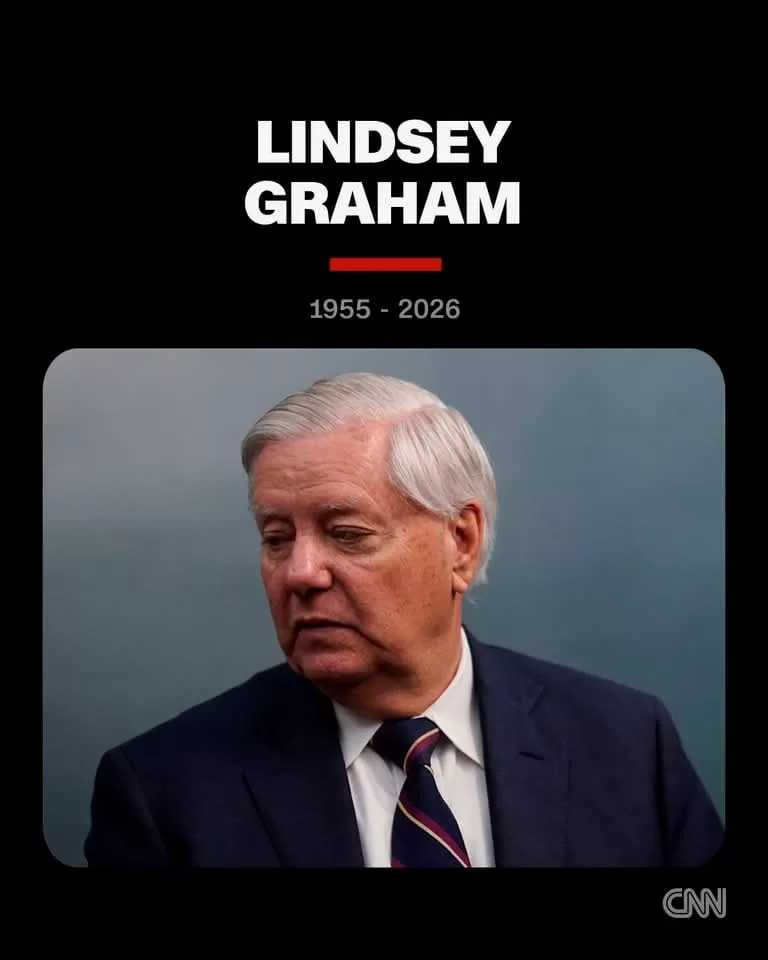
Lindsey Graham, South Carolina Senator, Dies at 71 After Brief Illness
Jul
Lindsey Graham, South Carolina’s veteran Republican senator and one of Washington’s best-known advocates of a hard-line foreign policy, has died at 71 following what his office called a “brief and sudden illness.” His death was announced on Sunday, July 12, 2026, bringing to a close a 30-year career in Congress that ran from the Gingrich-era Republican capture of the House through Donald Trump’s second presidency.
Graham’s office did not immediately provide a specific cause of death. In its statement, the office requested privacy for his family and said details about funeral services would be released later. He is survived by his sister, Darline Graham Nordone. Graham never married and had no children, a personal reality he often addressed in his typically direct style, saying that circumstance and public life had led him down a solitary road.
Lindsey Olin Graham was born in Central, South Carolina, in 1955, and shaped a political persona grounded in the small-town Upstate, military service, legal experience, and tough national security views. His parents owned a restaurant and pool hall, and both died while he was still young. While studying at the University of South Carolina, where he later received his law degree, Graham became the legal guardian of his younger sister. He served in the Air Force’s Judge Advocate General’s Corps and maintained a long military connection through the Air Force Reserve, retiring as a colonel after decades in uniform.
Graham first won elected office in the South Carolina House, then captured a U.S. House seat in 1994. In 2002, he was elected to the Senate, taking the seat once held by Strom Thurmond, and eventually became South Carolina’s senior senator. Over time, he developed a reputation as an energetic, media-fluent Republican whose influence extended widely across foreign policy, defense, immigration, judicial confirmations, and Senate investigations.
For many years, Graham was closely linked with the late Senator John McCain. Both men believed in an assertive use of American power, strong U.S. alliances and military assistance, and, at least earlier in their careers, a readiness to push back against elements of their own party. Graham supported the Iraq War, argued for substantial defense spending, promoted interventionist policies in the Middle East, and became one of Israel’s most reliable supporters in the Senate. More recently, he was also one of the Republican Party’s strongest advocates for Ukraine in its fight against Russia, including through sanctions and military aid.
His last public work reportedly included a visit to Ukraine, where he met with President Volodymyr Zelenskyy and discussed ongoing U.S. support. That timing added geopolitical significance to his death: Graham died as Washington was once again facing crises involving Russia, Ukraine, Israel, Iran, and American military commitments abroad, all subjects on which he had been a prominent and influential voice.
Graham’s domestic political legacy is just as closely connected to the Trump years. During the 2016 Republican presidential primary, he was among Donald Trump’s fiercest critics, calling him unfit for office and warning that he would damage the party. After Trump’s victory, however, Graham made one of the most dramatic reversals in modern Republican politics. He became a frequent Trump ally, defender, and golf companion, while still parting with him at times on foreign policy. That shift turned Graham into a symbol of the wider Republican Party’s adjustment to Trump: pragmatic and effective to his supporters, opportunistic and telling to his critics.
As chairman of the Senate Judiciary Committee from 2019 to 2021, Graham was a key figure in confirming conservative judges, including Supreme Court Justice Amy Coney Barrett in 2020. He also defended Trump through impeachment fights and remained an important Republican voice on immigration, crime, national security, and the courts.
His bond with Trump was always complicated. Graham briefly stepped away after the January 6, 2021, attack on the U.S. Capitol, saying then that “enough is enough,” but later moved back into Trump’s political circle. By 2024 and through Trump’s second term, Graham had once again become a visible supporter, particularly on defense and foreign policy. After Graham’s death, Trump paid tribute to him, calling him a patriot and one of the great senators he had known.
The fallout in South Carolina politics is already being felt. Graham was pursuing a fifth term in the Senate in the 2026 election cycle. Under the state’s rules, Governor Henry McMaster is expected to name an interim replacement, while voters will later choose who serves in the seat over the longer term. Since South Carolina is a deeply Republican state, the seat is expected to stay with the GOP, but Graham’s death sets off a significant struggle for influence within the state party. Possible replacements may emerge from the congressional delegation, statewide elected offices or the conservative activist wing, which had remained wary of Graham for years despite his partnership with Trump.
At the national level, his departure takes away one of the Senate GOP’s most seasoned voices on defense, intelligence and foreign policy. Graham’s clout never came only from the committees he served on. He was a regular figure on Sunday television programs, at international crisis points, in bipartisan talks and in private Republican leadership discussions. In any given week, he could act as a negotiator, a partisan brawler, a messenger for Trump and a hawkish opponent of isolationism.
To Democrats, Graham was frequently a difficult figure to deal with: willing to bargain across party lines on matters like immigration reform, yet also a combative conservative when the fight involved judicial nominations, impeachment or election politics. Many Republicans valued him because he knew both the mechanics of Washington and the demands of television politics. Among Trump-aligned conservatives, he became useful without ever being fully trusted, particularly because of his earlier McCain-style interventionist outlook.
Graham’s death brings to an end the career of a senator who carried several Republican eras in one person: post-Cold War confidence in military power, Bush-era interventionism, Tea Party pressure, Trump-era loyalty politics and the modern GOP’s unsettled argument over America’s place in the world. His seat can be filled. Replacing his specific blend of legal aggression, foreign policy focus, public visibility and political flexibility will be far more difficult.
